Loft Conversions in Braintree, Essex
Loft conversion work in Braintree runs across an unusually wide span of housing. This is an old cloth town that became an industrial one, then a commuter town, and each of those phases left its own streets behind. A Victorian terrace built for a Courtauld weaver, an inter-war semi on the roads out of town, and a 1990s estate house near the station will each need a completely different approach — and the roof, not the postcode, is what decides which.
Our Loft Conversion Services in Braintree
What suits your property is determined by the roof above your ceiling rather than by preference. These are the five approaches we work with locally.
- Dormer loft conversions — building outward from the rear slope for flat-ceilinged head height, the most common answer here
- Velux loft conversions — rooflights fitted flush into the slope, and the likely route within the town centre conservation area
- Hip to gable conversions — squaring off the sloping ends common on the inter-war semis
- Mansard conversions — replacing the roof structure to gain close to a full extra storey
- L shaped dormer conversions — two dormers across a rear outrigger on the Victorian terraces
Why Choose Us for Loft Conversions in Braintree
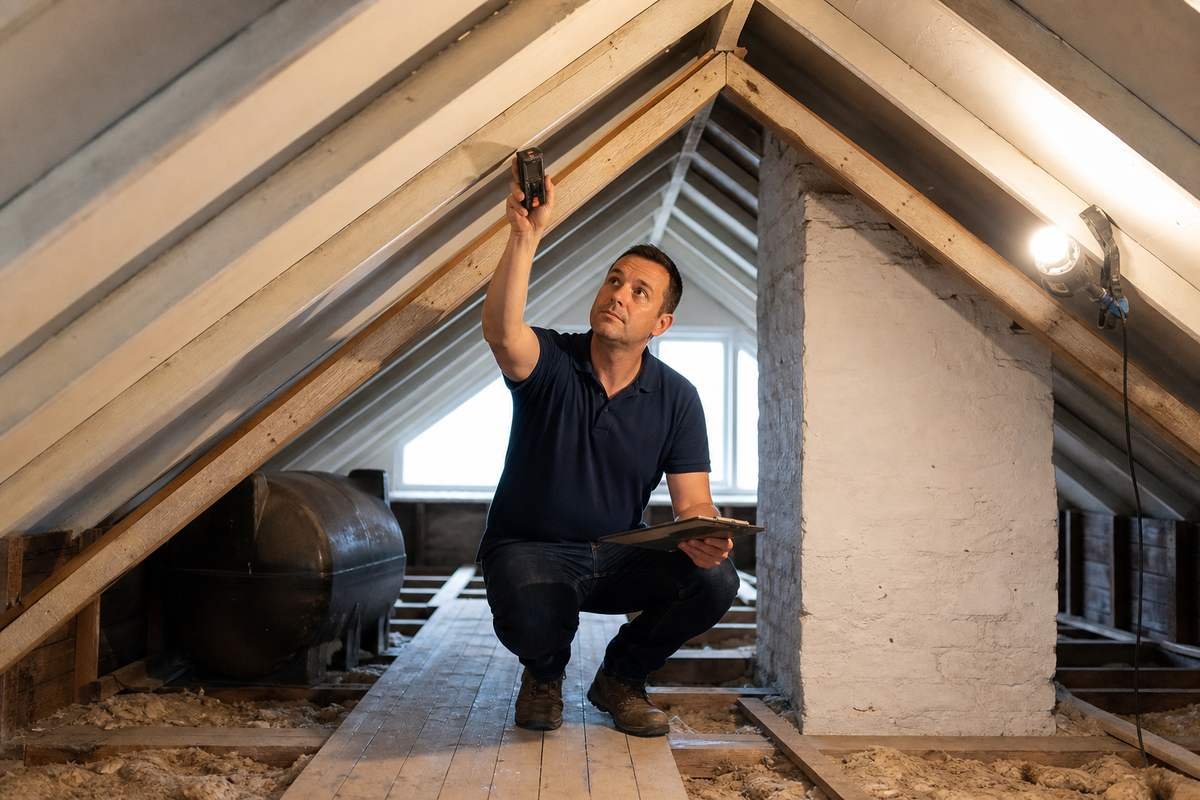
- We identify cut versus trussed roof construction at survey, which across Braintree’s mixed stock is the single fact that moves the price most
- Conservation area work handled properly, including flush conservation rooflights where a dormer would not be acceptable near the town centre
- We check listing status before designing, since the older parts of town include a number of listed buildings where consent is a separate requirement
- Structural calculations, Building Regulations submission and inspections managed throughout
- Fixed written quotation after survey, with no provisional sums left in the figure
Braintree Housing and What It Means for Your Loft
Braintree made cloth for centuries and then made silk. Courtauld’s built their works here in the nineteenth century, Warner and Sons wove silk in the town, and the Courtauld family’s money paid for a good deal of what stands in the centre — the town hall, the institute, the public gardens. Lake and Elliot’s engineering works followed, and later Crittall, whose steel windows went into buildings across the world and whose model village at Silver End sits a few miles down the road.
Each of those employers built or drew housing, and the town reads accordingly.
The Victorian and Edwardian terraces closest to the old works are the oldest domestic stock in quantity. Steep pitches, cut timber roofs on purlins, narrow footprints, and frequently a rear outrigger — the classic L shaped dormer candidate. The steep pitch gives you ridge height; the outrigger gives you the extra floor area that turns one bedroom into two.
Inter-war expansion brought the semi-detached house with hipped ends, spreading along the roads out of town. These are the hip to gable properties. The sloping end narrows the loft where the staircase needs to arrive, and squaring it into a gable recovers the width. Combined with a rear dormer it produces a proper double bedroom rather than a compromised single.
From the 1960s onward, and heavily through the 1980s and 1990s as Braintree became a commuter town on the Liverpool Street line, estate housing filled in around the edges. That stock brings trussed roofs. A trussed roof looks like a loft but is not one — the void is filled with structural timber that cannot be cut away without replacing what it carries. Converting one means new support and a rebuild, which is a different job and a different price from opening up a cut roof.
The town centre conservation area covers much of the historic core around Bank Street and the Market Place, with a number of listed buildings inside it. There, anything altering a roof visible from the street faces scrutiny, and conservation rooflights are usually the workable answer rather than a dormer.
Serving Braintree and the Surrounding Area
We work throughout Braintree, Bocking, Great Notley, Silver End and the surrounding villages, and across the wider area including Witham, Maldon, Billericay and South Woodham Ferrers, as well as Chelmsford itself.
Building Regulations requirements for structural alterations to roofs are explained by LABC.
If you are considering a loft conversion in Braintree, the first thing worth establishing is whether your roof is cut or trussed, because it determines everything that follows. A survey answers that in minutes, at no charge and with no obligation.